The Physics of the Cut: Why Standing Up Actually Changes Your Lawn
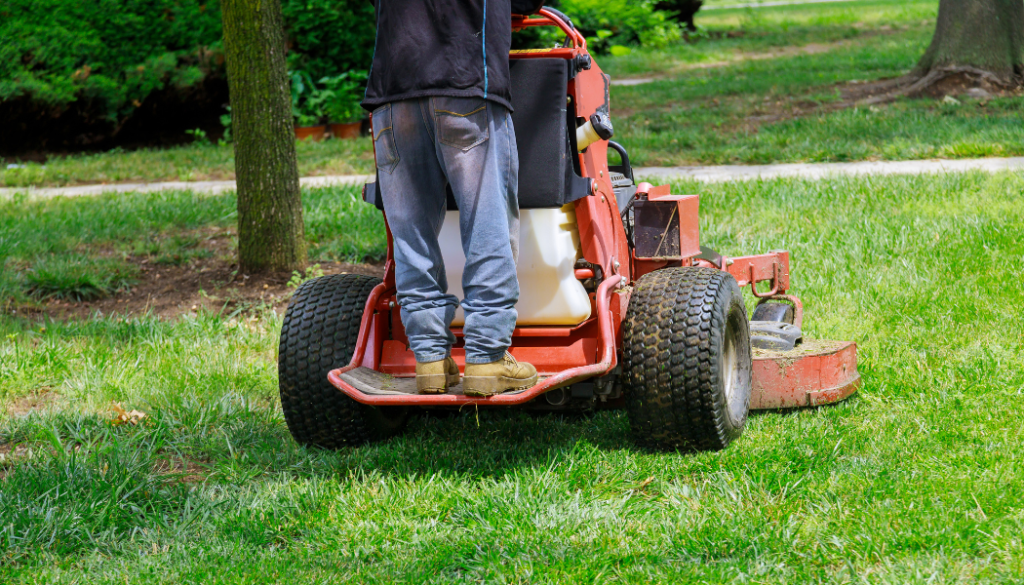

Most homeowners look at lawn equipment and assume a mower is just a mower. As long as the steel blades are sharp and spinning fast, the grass gets short. But if you spend ten minutes watching a professional landscaping crew operate, you will notice a massive shift in how they work. They are abandoning the massive, heavy sit-down mower and moving almost exclusively to upright machines.
They aren’t doing this just to save space on their utility trailers. The physical geometry of a stand-on mower fundamentally changes how the machine interacts with the turf.
When you change where the operator’s body weight sits, you change the center of gravity, the footprint of the tires, and the leverage applied to the deck. It transforms mowing from a passive driving experience into an active, physical process. If you are debating what kind of machine to put on your grass this season, here is a hard look at exactly how standing up produces a physically different, healthier cut.
1. Eliminating the Pivot Tear
The single biggest source of lawn damage caused by sit-down zero-turn mowers is the pivot. On a standard sit-down machine, the massive engine, the dual hydro-transmissions, and the operator’s entire dead weight are stacked directly over the rear drive tires. The front of the mower is comparatively incredibly light. When you pull the lap bars to execute a tight, 180-degree turn at the end of a stripe, those heavily loaded rear tires act like a drill. They dig deep into the topsoil, instantly ripping the grass out by the roots and leaving ugly brown divots.
A stand-on machine completely rearranges this weight distribution. The engine is pushed forward, and the operator stands on a platform positioned between the rear drive wheels and the front casters. This perfectly balances the footprint. Because the weight is evenly dispersed, the machine glides across the grass. When you pivot, the tires roll across the grass blades instead of grinding them into the dirt, preserving the health of the turf in the tightest corners of your yard.
2. Active Weight Shifting vs. Passive Driving
When you sit on a heavy mower, you are just a passenger. If the mower hits a dip in the yard, an exposed tree root, or a hidden sprinkler head, the heavy cutting deck dips violently right along with it. The blades smash into the dirt, scalping the grass completely down to the mud and ruining your edge.
On a stand-on unit, you are actively participating in the physics of the machine. Your legs act as natural shock absorbers. More importantly, you have mechanical leverage.
If you see a bump or a severe dip approaching, you can instantly shift your body weight backward on the platform and pull slightly on the controls. This micro-adjustment temporarily lightens the front of the machine, allowing the mower deck to physically float over the obstacle rather than plowing into it. This active weight shifting guarantees a perfectly level, consistent cut height across highly uneven, bumpy terrain.
3. Holding a True Line on Slopes
Cutting grass on a hillside is the ultimate test of a mower’s geometry. Sit-down zero turns are notoriously dangerous and destructive on hills. Because the operator is sitting high up on a seat, the center of gravity is dangerously high. Gravity constantly pulls the heavy rear end downhill. As the tires inevitably slip and slide sideways, they shred the grass down to the soil.
Stand-on units essentially glue themselves to hillsides. The heaviest component of the entire operation—your body weight—is positioned on a platform located just a few inches off the grass. This gives the machine an incredibly low center of gravity. Furthermore, when you hit a steep grade, you can literally lean your hips and shoulders directly into the hill to counterbalance the mower. This allows the tires to maintain maximum traction, holding a perfectly straight cutting stripe across a slope without the violent sideways sliding that tears up the yard.
4. Unobstructed Sightlines and Perfect Overlaps
A professional-looking cut is entirely dependent on the overlap. If your tire tracks don’t overlap perfectly, you leave behind thin, ugly mohawks of uncut grass running down the middle of the yard.
On a sit-down mower, the front cowl or your own knees often block your direct line of sight to the leading edge of the mower deck. You have to lean awkwardly out of the seat just to see where your blade is.
Standing up puts you directly over the action. You have a completely unobstructed, 360-degree view of the exact edge of the cutting deck and the front caster wheels. This surgical line of sight allows you to trace curved landscaping beds, cut aggressively tight around tree rings, and overlap your cutting stripes with absolute perfection. You aren’t guessing where the blade is; you are looking right at it.
Cut Grass With Stand-On Mowers
Grass is a living organism, and how you drive over it matters just as much as how sharp your blades are. Heavy, unbalanced machinery compacts the soil, suffocates the roots, and aggressively tears the turf every time you change direction. By changing the physical footprint and allowing the operator to actively balance the machine, an upright mower stops treating your yard like a construction site and starts treating it like a golf course.

About Author