Has Trump Liberated Three Major Media Outlets from His Control?
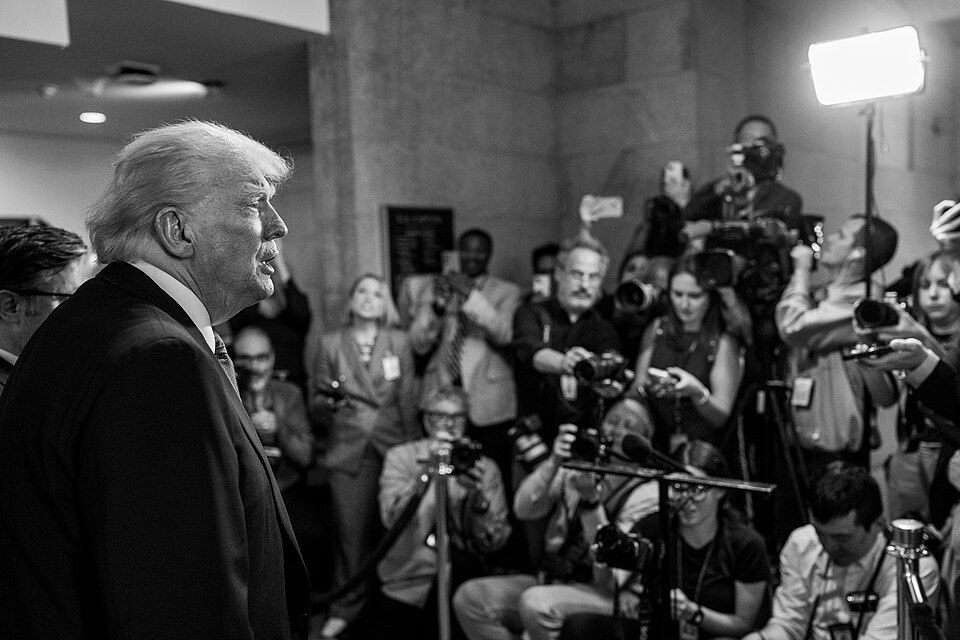
President Donald Trump speaks with members of the media after delivering remarks at the House GOP Conference about passing his budget bill, Tuesday, May 20, 2025, at the U.S. Capitol in Washington, D.C. (Official White House Photo by Molly Riley)

By Kevin Price, Editor at Large
President Donald Trump’s decision to ban CNN, MSNOW, and Politico from the White House press room was framed as a punitive strike against hostile coverage. Yet, stripping official credentials from these three major outlets might have achieved something entirely unintended: it likely liberated them from the onerous, ongoing pressures of political accommodation.
For years, mainstream news organizations have walked a precarious line between preserving physical access to the West Wing and delivering uncompromising reporting. This has been particularly true under the Trump Administration. Media critics across the spectrum have noted how this balancing act often led to quiet concessions—softened headlines, sanitized framing, and deliberate attempts to appeal to conservative viewers to prove institutional balance. CNN, in particular, suffered severe brand dilution after attempting to reposition itself toward the middle, while MSNBC’s recent transition to MSNOW highlighted an ongoing search for identity and viewership stability. Politico, despite its deep policy reporting and legislative focus, has long ceased to command significant readership outside the progressive camp.
By revoking their press passes, the administration effectively eliminated the return on investment for those institutional accommodations. Outlets no longer need to tone down coverage to protect briefing room seating, preserve photo opportunities, or retain pool reporting duties. The incentive structure for media dealing with the Trump Administration has flipped entirely.
Modern investigative reporting has rarely depended on physical access to White House briefing rooms. Major deep dives, regulatory investigations, financial disclosures, and insider scoops rely almost exclusively on sources and documents outside official podium appearances. Operating beyond official channels allows newsrooms to adopt a far more aggressive reporting posture. Deprived of official credentials, these outlets can lean into their core editorial identities without losing anything of practical operational value. In fact, I wouldn’t be surprised if each of these hire additional staff to strengthen their coverage. That is, people hired to explicitly do much more “digging.”
The political timing is equally significant. With the administration soon to be entering its final two years and midterms approaching, news organizations are already positioning themselves for the next electoral cycle. For media outlets managing audience retention and subscriber growth, an official exclusion by the executive branch actually serves as an extremely powerful highly effective marketing asset. In the current media landscape, this exile has the potential to be seen as a badge of honor that reinforces their standing among core readers and subscribers who demand an adversarial press.
The primary metric for readers to keep an eye on moving forward is just how aggressively these media outlets challenge the administration. By removing the promise of official access, the White House inadvertently eliminated the primary reason these newsrooms had to exercise restraint. Whether through sharper investigative series, bolder opinion commentary, or uncompromising analytical reporting, these outlets now have every reason to embrace an authentic, adversarial stance. Trump intended to lock them out, but he may have handed them their most compelling editorial strategy yet.

About Author