Assessing “That Girl” 60 Years Later

By Kevin Price, Editor at Large
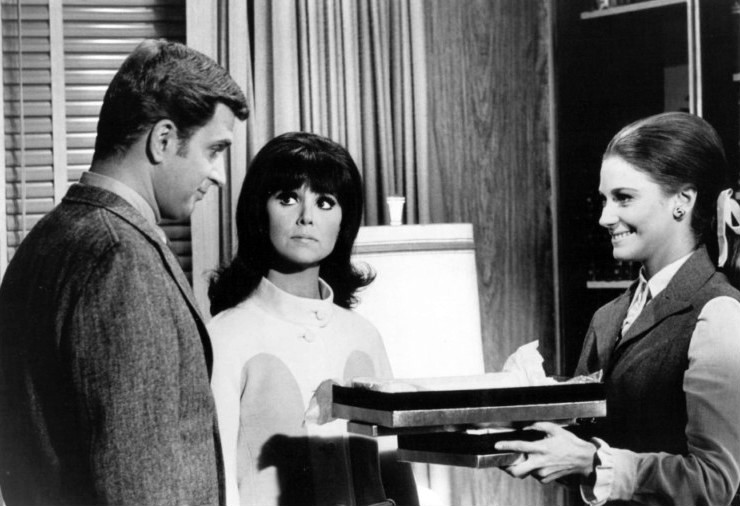
When That Girl debuted on ABC in 1966, Marlo Thomas and her creative team introduced a genuine cultural touchstone: a young, single woman living in New York City, pursuing an acting career, paying her own rent, and defining her life outside the traditional confines of marriage. Ann Marie was ambitious, resourceful, and capable. Yet, viewing the series six decades later reveals a striking conceptual collapse in its final seasons—one that ultimately betrayed the very independence the show set out to celebrate. So profound were the changes in seasons 4 and 5 they should have changed the title from “That Girl” to “‘That’ Girl – a truly odd freak of nature.
As the series progressed toward its fifth and final season, network executives placed immense pressure on the production team to marry off Ann Marie and Donald Hollinger. Thomas famously resisted, refusing to send the message that a woman’s ultimate purpose in life was to walk down an aisle. But in resisting the conventional television wedding, the writing team retreated into a false, binary dynamic: independence required remaining single, while commitment inevitably led to domestic regression.They completely ignored a viable “third way” that the feminist movement could have used at this time.
Instead of writing a modern, interdependent partnership where two career-minded adults navigate life as equals, the scripts systematically stripped Ann Marie of her slightly dizzied but authentic competence (it was, after all, a comedy). Throughout seasons 4 and 5, the sharp, self-reliant woman of the early episodes devolved into an exaggerated, scatterbrained figure of panic. Simple logistical challenges, minor miscommunications, and routine adult decisions generated chaotic misunderstandings that required resolution by the men in her life.
This regression was most profound in her evolving relationships with her fiancé and her father. Donald Hollinger remained consistently written as a patient, rational, and supportive potential husband—a model partner for a union of equals. Yet, rather than meeting him as an emotional and intellectual peer, Ann was repeatedly placed in a position of dependency, positioning Donald less as a partner and more as a long-suffering caretaker. Simultaneously, her reliance on her overprotective father, Lew, escalated into a childlike reliance, reversing the subtle boundary-setting she had achieved in season 1.
The critical flaw of That Girl’s final stretch lay in this ideological trap. By treating marriage as an existential threat to female autonomy, the show failed to offer a third way—a vision of healthy, integrated partnership where a woman could retain her career ambitions and individual identity while also committing to a spouse. The series inadvertently validated the conservative premise of its era: that a woman could not be both strongly independent and truly happily married.
Sixty years later, That Girl deserves credit for opening the door to female-centric television narratives, paving the way for the much more progressive The Mary Tyler Moore Show and generations of autonomous leads. However, its conclusion stands as a cautionary tale of binary thinking. In attempting to protect Ann Marie from the domestic tropes of late-1960s television, the creators reduced her to a state of helpless neurosis, proving that denying a character a healthy path to partnership can be just as limiting as forcing her into a traditional mold.
Explore more insights at https://thedailyblaze.com/.

About Author