Money Changes Everything: Jilted Lovers, Revenue Sharing, and NIL

INTERVIEW ON THE PRICE OF BUSINESS SHOW, MEDIA PARTNER OF THIS SITE.
Recently Kevin Price, Host of the nationally syndicated Price of Business Show, interviewed Michael Marino.
The Michael Marino Commentaries
Lyrics Cyndi Lauper wrote nearly a half century ago now apply to NIL and transfer portals.
“We swore each other everlasting love, (then) she said, well yeah, I know, but there was one thing we weren’t really thinking of and that’s money! Money changes everything.” (1983).
From the founding of the NCAA, college athletes have been the Centurions of the college battlefield, carrying the glory of their school’s colors, while epitomizing for fans and loyal alumni the thrill of victory and the heartfelt agony of defeat. Yes, there were perks along the way for alumni favored athletes who brought glory to their alma maters, but nothing to compare to the flow of cash pouring out now to athletes. The House settlement authorized direct dollar payments to athletes of up to $21.5 million for all sports. Combined with NIL, those numbers quickly became the starting point. Under the settlement, third party money is to be reviewed by the College Sports Commission, or CSC. The Commission is overwhelmed. Since its establishment it has cleared over $582.5 million in deals. Over $150 million have been denied. According to CBS Sports, several investigations have now been launched by CSC related to cap evasion. The payments made are supposed to be tied to fair market value and meeting the promotional requirements. Many are being questioned. The football numbers alone often exceed $40 million in payments, often with little left available for women’s and Olympic sports programs. With no real enforcement mechanisms, the result is the wild west continues and the money demands grow. The power conferences are cutting deals with private sponsors and equity firms to finance unsustainable money. Alumni are starting to push back on ticket requirements and surcharges. Schools with proud histories of football pride and programs are re-evaluating the ability to continue such programs. College budgets are facing all types of financial pressures. Athletes jump to the highest bidder. At the root: money. The amateurism model has virtually disappeared. Compelling arguments can be made that athletes, those who created the “product” of sport that we all came to know and love, were left out of the party. Once the money started flowing to schools, into stadiums and to coaches, it’s difficult to say athletes should be denied their time to be rewarded. The problem, as stated frequently by the massive lobbying effort aimed at passage of the Protect College Sports Act, is that pendulum has now begun to swing the other way. Most of the colleges and conferences see many positive developments in framing the issues. However, the voices of the athletes have not been at the party. And many justifiably believe they should be able to maximize their financial gains. This is why the PCSA is likely to face strong opposition in the House. Putting aside the unpredictability of the mid-term elections, it is possible there will be more voices favoring defining athletes as employees, and calling for authorized collective bargaining, which is one potential way for having everyone at the table to set agreed upon rules. So uncertainty at best for a near term federal statutory resolution, despite overwhelming support in the Senate. Without a statutory framework, where are we?
Increasingly there are more lawyers in court than players on the court. The average men’s basketball roster now costs an estimated $13.5 million, nearly double the cost of a year ago. Eleven basketball programs exceed $20 million, with Florida reportedly over $25 million.
Because of the lucrative nature of financial opportunities at college, more athletes are seeking another opportunity to be “boys”. Former Purdue star Trey Kaufman-Renn is the most recent striking example. After 5 years at Purdue, he was the 59th pick in the NBA draft. He then elected not to sign his rookie contract with the Timberwolves and instead sued the NCAA for another year of eligibility, secured a preliminary injunction (two weeks ago) and is now practicing at Kansas. Incidentally, Kansas has two other players on its roster who are only eligible due to securing preliminary injunctions in their own lawsuits against the NCAA.
The NCAA is attempting to fire back. In addition to fighting each eligibility lawsuit, last week, it sued Ohio Gov. Mike DeWine after he issued an executive order allowing Ohio colleges to disregard part of the NCAA’s new eligibility rules, thereby permitting the Class of 2022 athletes to compete for a fifth season. Like the LSU litigation, Ohio chose to protect its interests and those of its players. All are a direct challenge to the authority of the NCAA, which is often seen as the poster child for the disruption that has occurred.
The voids created by the ineffectiveness of the NCAA are now being filled, in part, by Conference decisions on self-governance. The SEC presidents voted to adopt standardized NIL and revenue-sharing contracts, effective immediately following a similar decision by the Big Ten. While specifics are lacking, these moves highlight the need for the Conferences to unite on proper framework, with legislation still uncertain and litigation continuing to skyrocket. The Conferences, with the power of expulsion, appear so far to be the only effective decision makers.
Presidents, Governors, Private Equity Funds, Colleges, Alumni, Agents, and yes, Lawyers.
Cyndi was right: “MONEY CHANGES EVERYTHING”.
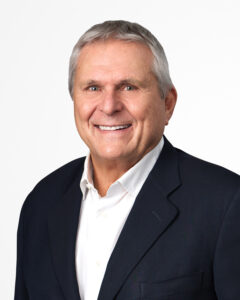
Michael Marino is a NYC-based management labor, employment and entertainment lawyer who for decades has represented corporations, executives, celebrities, sports figures, and influencers. A member of the College of Labor and Employment Lawyers, he has tried federal court cases across the country and negotiated hundreds of collective bargaining and marketing agreements. Before entering private practice, he served proudly as an officer in the United States Marine Corps, and as Special Counsel to the Secretary of the Navy. He is a graduate of Georgetown University Law Center, Syracuse University College of Law, and Cornell University’s School of Industrial and Labor Relations.
Learn more at https://www.seyfarth.com/people/michael-f-marino.html/.
Connect with Michael on social media:
LinkedIn: https://www.linkedin.com/in/michaelfmarino
Twitter/X: https://x.com/seyfarthshawLLP
Explore more insights at https://thedailyblaze.com/.

About Author