The Invisible Science Keeping Things From Falling Apart: How Industries Use Metrology
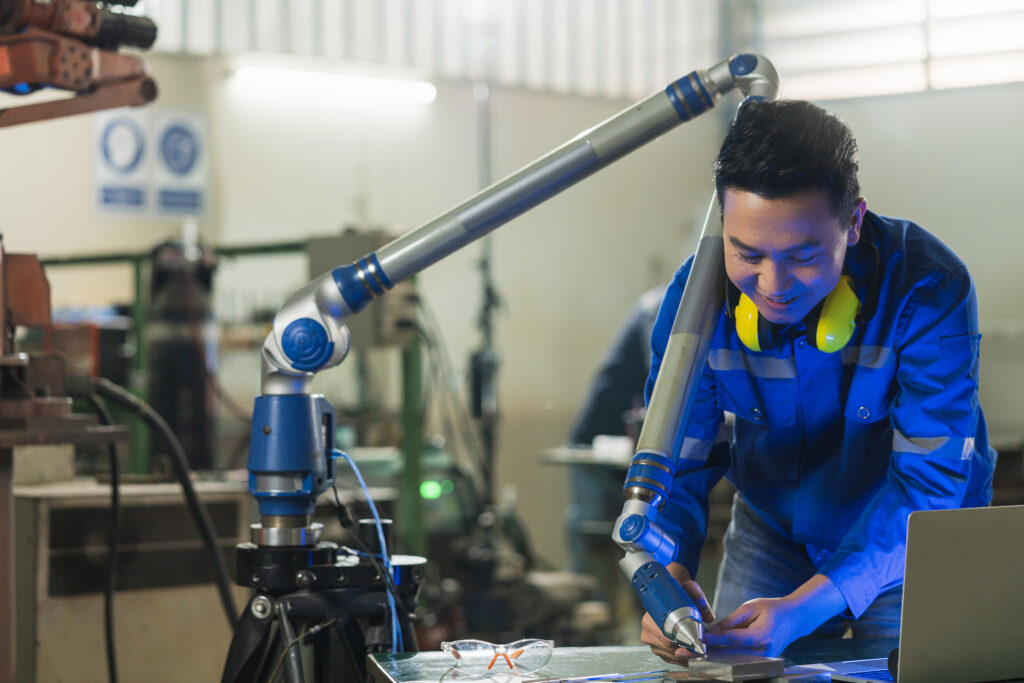

Have you ever thought about why the heavy steel doors on your truck close with a satisfying, airtight thud every single time? Or how a titanium replacement hip joint fits flawlessly into a human body on the very first try? We take this kind of manufacturing precision completely for granted. We expect things to just work.
But behind every physical product that operates the way it is supposed to, there is an entire hidden world of obsessive, exact measurement. This is the science of metrology.
When a factory floor is dealing with mechanical tolerances that are significantly thinner than a single human hair, engineers cannot just eyeball a part or throw a standard tape measure over it and hope for the best. They rely on highly calibrated, incredibly sensitive metrology equipment to ensure that the physical reality of a manufactured part matches its digital blueprint with absolute perfection.
If you have ever wondered how the biggest manufacturing sectors in the world guarantee their products won’t fail under pressure, here is a hard look at how different industries rely on the exact science of measurement.
1. Aerospace: Where a Millimeter Costs Millions
The stakes simply do not get much higher than building components for commercial jetliners or military fighter jets. If a single titanium turbine blade inside a jet engine is machined off by a fraction of a millimeter, the resulting aerodynamic imbalance can cause catastrophic engine failure at 30,000 feet. There is a literal zero-tolerance policy for dimensional errors.
To prevent this, aerospace manufacturers rely heavily on massive coordinate measuring machines (CMMs). Instead of relying on human eyesight, a CMM uses a highly sensitive, ruby-tipped probe to physically touch thousands of specific points across the surface of a complex machined part. The machine feeds those physical coordinates back into a computer, creating a flawless 3D map of the actual part to compare directly against the original CAD file. If a bolt hole is drilled one-thousandth of an inch too deep, the CMM flags it, and the part is scrapped before it ever gets near an airplane.
2. Medical Device Manufacturing: The Non-Contact Rule
The medical manufacturing industry presents a unique challenge. Think about a spinal fusion cage, a pacemaker casing, or a knee replacement. These parts have to seamlessly integrate into the human body. If the surface of an artificial joint isn’t flawlessly smooth or if the dimensions are slightly skewed, the patient will be left in chronic pain, requiring a secondary surgery.
The problem is that many of these medical components are incredibly fragile or made of highly specialized, sterile plastics that can be easily scratched or deformed if a heavy physical probe touches them.
To solve this, medical manufacturers lean heavily into “non-contact” metrology. They use optical comparators and automated vision measuring systems. These machines utilize high-definition cameras, specialized lasers, and highly controlled stage lighting to measure microscopic features and surface finishes without ever physically touching the part. It guarantees mathematical perfection while maintaining total part integrity and sterility.
3. Automotive Assembly: The Need for Relentless Speed
Building one perfect prototype car in a lab is difficult, but building 1,000 perfect cars every single day on a moving assembly line is a logistical nightmare. In automotive manufacturing, metrology isn’t just about accuracy; it is entirely about speed and repeatability.
If a stamping machine starts drifting out of alignment, it might produce 500 defective car doors before anyone notices. By then, the financial loss is staggering. Instead of taking parts off the line to put them in a slow, isolated measurement room, modern car plants bring the metrology directly to the assembly line.
Automotive workers use handheld 3D laser scanners and automated optical trackers. As a car chassis rolls down the line, these tools sweep a laser grid over the entire vehicle body in a matter of seconds. The scanner instantly analyzes the panel gaps, ensures the doors won’t leak in the rain, and verifies that the structural weld points are exactly where they need to be. It provides real-time quality control without ever stopping the conveyor belt.
4. Semiconductor Fabrication: Measuring the Invisible
Down at the microchip level, engineers aren’t even talking about millimeters or inches anymore. They are operating on the nanoscale.
The silicon wafers that power your smartphone, your laptop, and your car’s navigation system have microscopic circuits etched directly into them. If the width of a circuit or the thickness of a chemical film is off by just a few atoms, the electrical current will short out, turning the microchip into a very tiny, very expensive brick.
Standard light microscopes cannot even see these features. Semiconductor labs have to use atomic force microscopes and scanning electron microscopes just to verify their manufacturing processes. It is an industry where the measurement tools are often just as complex and expensive as the products they are measuring.
The Measure of Metrology
We live in a mass-produced world, but we expect custom-built quality. The only reason our cars start, our planes fly safely, and our electronics function is because of the relentless, uncompromising standards enforced by metrology. When you invest in the right measurement equipment, you aren’t just buying a tool to check a box for the quality assurance department. You are actively buying the insurance that your product will actually survive the real world.

About Author