Smart Climate Control: How to Manage Your HVAC System While Traveling

Packing your bags, finalizing your itinerary, and double-checking your flight times usually dominate your pre-vacation checklist. You probably remember to lock the doors, hold the mail, and set a few lights on timers to deter burglars. However, while you’re rushing to get to the airport on time, it’s incredibly easy to overlook one of the most vital components of your home. Your heating and cooling system needs a little bit of preparation before you leave town.
Coming home to a sweltering living room or a freezing house isn’t the way to end a relaxing trip. Worse yet, an unmonitored system can break down, leaving you with unexpected repair bills. If you notice weird noises or poor airflow before packing up, calling a reliable HVAC service for a quick tune-up is a smart move. Even if your unit is running smoothly, you need to take a few simple steps to protect it while the house is empty.
Find the Perfect Away Temperature
The biggest mistake homeowners make before leaving for a long trip is turning their climate control completely off. It seems like a logical way to save money on your utility bill, but it often ends up costing you much more later. If you turn off the air conditioning during a hot summer getaway, the humidity inside your house will skyrocket. This trapped moisture warps hardwood floors, peels wallpaper, and creates a perfect breeding ground for mold.
In the winter, shutting the heat off puts your pipes at risk of freezing and bursting, leading to devastating water damage. Instead of turning the power off, just adjust the thermostat. In the summer, set it to around eighty-five degrees. In the winter, lower it to fifty-five degrees. These settings keep the indoor climate stable enough to protect your property while minimizing your energy consumption.
Install a Smart Thermostat
If you travel frequently, a smart thermostat is one of the best investments you can make for your property. Older programmable models are great, but they lack the flexibility a frequent traveler really needs. A smart device connects to your home’s Wi-Fi network, allowing you to monitor and control the indoor temperature right from your smartphone.
If a surprise heatwave hits your hometown while you’re relaxing on a beach, you can easily log into the app and lower the temperature a few degrees to protect your electronics and furniture. Many smart thermostats also send alert notifications directly to your phone if the temperature drops too low or rises too high, warning you of a potential system failure before it turns into a disaster. You can even use the app to return the house to a comfortable temperature a few hours before your flight lands.
Swap Out the Air Filter
Your system relies on a steady flow of air to function efficiently. The easiest way to restrict that airflow and strain the equipment is by leaving a dirty, clogged filter in place while you’re away. When the blower motor has to work twice as hard to push air through a layer of dust and pet dander, it increases the risk of a mechanical breakdown.
You don’t want the motor burning out while the house sits empty for two weeks. Take five minutes to swap out the old filter for a fresh one before you head out. A clean filter ensures the system breathes easily and runs efficiently, keeping your utility bills low and reducing wear and tear on the internal components.
Clear the Outdoor Perimeter
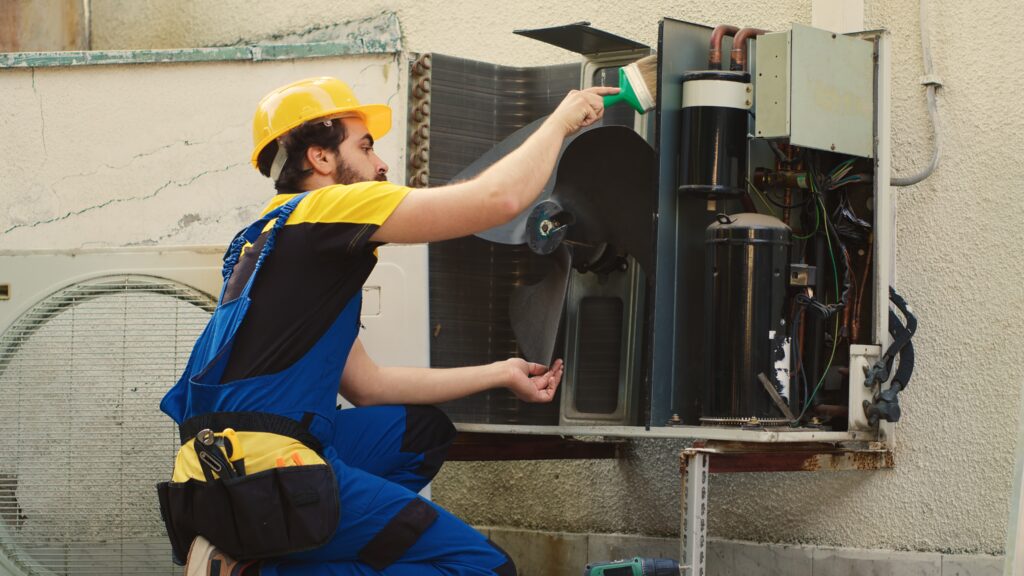
While you’re prepping the inside of the house, don’t forget to step outside and inspect the exterior condenser unit. A storm might roll through while you’re out of town, blowing debris right into the metal fins. Before you leave, clear away loose branches, dead leaves, or overgrown weeds sitting within a two-foot radius of the unit.
This buffer zone ensures the system pulls in enough air to cool the refrigerant effectively. If you have patio furniture or toys sitting too close to the unit, move them further into the yard. Ensuring the condenser has plenty of breathing room prevents the compressor from overheating.
Use Passive Temperature Control
You can make your system’s job much easier by utilizing passive climate control throughout the house. Before you walk out the door, walk through every room and close the blinds, shades, and curtains.
Direct sunlight streaming through your windows creates a greenhouse effect, raising the indoor temperature significantly. By blocking out the sun, you keep the house naturally cooler, which means your air conditioner won’t have to cycle on as often. In the winter, closing the curtains provides an extra layer of insulation against drafty windows, helping retain the heat generated by your furnace.
Ensure Proper Ventilation
Finally, resist the urge to close the interior doors and air vents. Many people think closing vents in empty guest rooms saves energy, but it actually disrupts the balance of the entire system.
Your ductwork was designed to distribute a specific volume of air throughout the entire square footage of your home. Closing vents increases the pressure inside the ducts, which forces the blower motor to strain against the resistance. Leave the vents open and keep the interior doors propped open so the air circulates freely from room to room.
Enjoy Your Vacation With Peace of Mind
Preparing for a vacation involves a lot of moving parts, but ignoring your home’s climate control is a costly oversight. Taking proactive steps ensures you won’t return to a stuffy, damaged, or freezing home. By setting a safe away temperature, changing the filter, and securing the outdoor unit, you protect your equipment and your wallet. Handle these simple tasks before you leave, and you can truly unwind and enjoy your trip knowing your house is in good hands.

About Author